
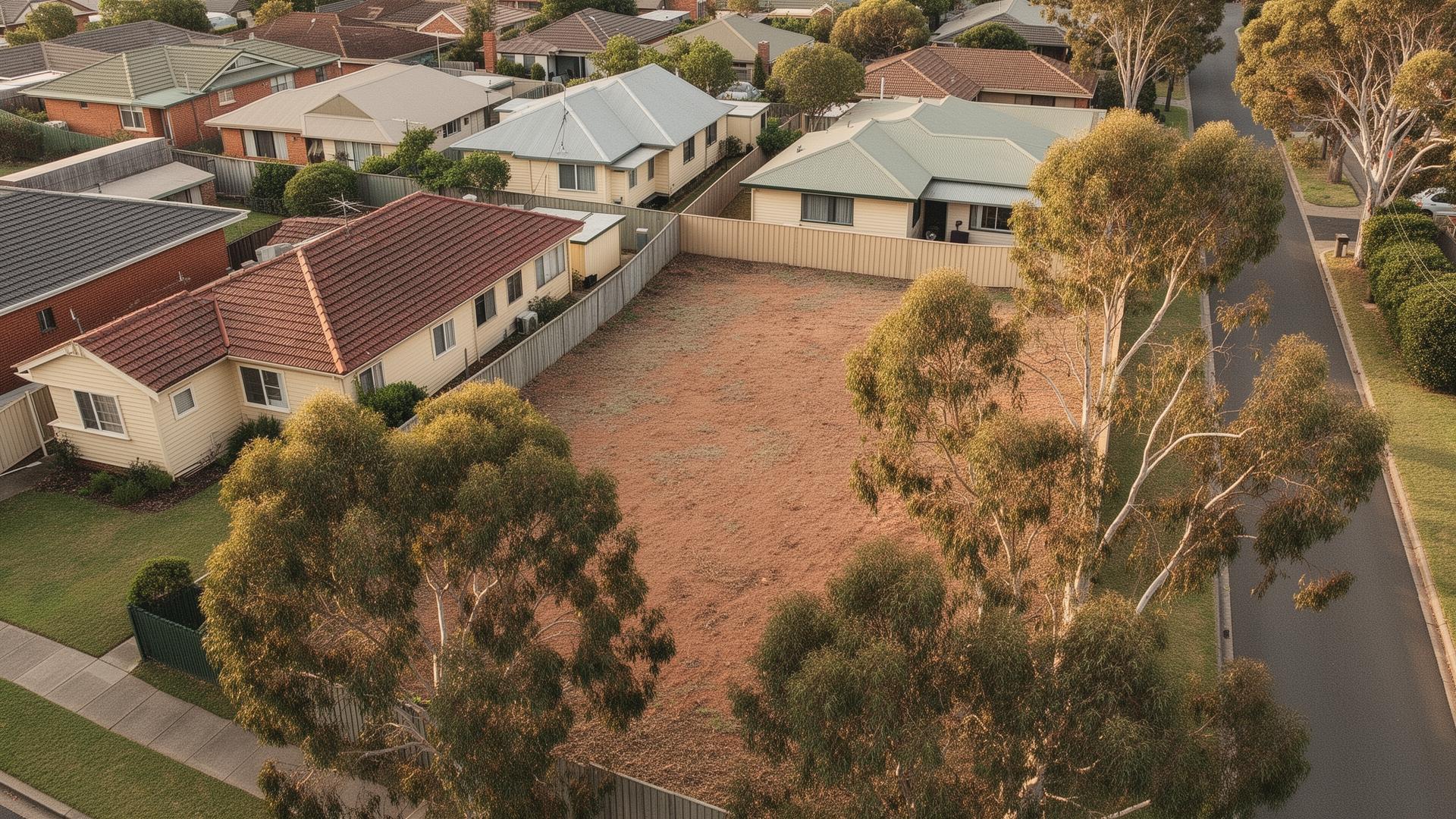
Property development is the process of buying land or an existing property and increasing its value by changing it: subdividing the land, building new dwellings, renovating, or converting its use. The developer carries the cost and the risk of that change, and realises the value by selling the finished product or holding it.
What is property development, exactly?
Strip away the jargon and development is one sentence: you take a property in one state and deliver it in a better one. A single block becomes two titles. A tired house becomes three townhouses. A wide corner allotment becomes a duplex. The value you create is the difference between what the finished result is worth and everything it cost to get there - land, construction, professional fees, council contributions, finance, holding costs and selling costs.
That gap is called the development margin. In small Australian projects a considered developer is usually targeting something in the order of 15-20% of total development cost, because that margin is what absorbs the things that go wrong. It is not profit in the everyday sense. It is the buffer between a project that works and one that quietly destroys capital.
What types of property development are there?
Most Australians who ask this question are looking at the small end of the market, not apartment towers. The realistic entry points are:
Splitting one title into two or more. Often the lowest-construction-risk path, because you may sell serviced land rather than finished buildings. The risk sits in planning approval and civil works costs.
Two dwellings on one site, either strata-titled or on separate torrens titles. A common first project because it is one build contract and one approval pathway.
Typically two to six dwellings on an existing residential site. More approval complexity, more capital, more upside, and considerably more that can go wrong.
Removing an existing dwelling and building a new one. Simple in structure, tight in margin, and highly sensitive to build cost movement.
Not development in the planning sense, but the same discipline: buy, improve, realise. It is the cheapest place to learn whether you enjoy the work.
How is development different from property investment?
Property investment is largely passive. You buy an asset and time, rent and the market do most of the work. Property development is an active, capital-at-risk business activity. You are not waiting for value - you are manufacturing it, and you carry delivery risk the entire way: approvals, builders, weather, finance conditions, cost escalation, and the market at the far end of an 18-month-to-3-year timeline.
That difference matters more than any technique you will learn. Development pays you for taking risk and managing it well. If the risk-taking part does not suit your financial position, your household or your temperament, no amount of technical skill fixes it.
What does the process actually involve?
A small Australian development follows a recognisable order, even though the detail varies by state and council:
- Decide whether development suits you, your capital and your household.
- Set a project brief: dwelling type, budget ceiling, target market, timeframe.
- Find and assess a site against the local planning controls.
- Run a feasibility study before committing to anything.
- Secure finance - development finance, not a standard home loan.
- Design and lodge for planning approval, then construction certification.
- Tender and contract a builder; manage the build.
- Complete, subdivide or strata title, and sell or refinance and hold.
Steps three onward are the part everyone reads about. Step one is the part that decides whether the rest ever works.
When you do reach step four, you can check your own numbers free on the Quick Check Feasibility Calculator - plug in a real site and see the verdict in about two minutes.
Who actually becomes a property developer?
There is no licence to become a developer in Australia. You engage licensed professionals - a town planner, a surveyor, a certifier, a builder - and you sit above them as the person carrying the money and the decisions. That low barrier is why so many people step in, and why so many step in before they are ready.
In thirty years, the people who did well were not the ones with the most technical knowledge. They were the ones who were honest about their financial position, their risk tolerance and how much of their week a project could realistically take.
Before the sites and the feasibilities, find out what type of developer you are. The Property Prequel Quiz takes five minutes and is free.
More short explainers like these are on the channel: Property Development Insite on YouTube.
Common questions
What is property development?
Property development is the process of buying land or an existing property and increasing its value by changing it - subdividing the land, building new dwellings, renovating, or converting the use. The developer takes on the cost and risk of that change and realises the value by selling or holding the finished result.
What is the difference between property development and property investment?
Property investment is largely passive: you buy an asset and hold it while rent and capital growth do the work. Property development is an active business activity - you put capital at risk to create value through construction or subdivision, and you carry the delivery risk until the project is finished.
What types of property development are there in Australia?
The most common small-scale types are subdivision (splitting one title into two or more), duplex or dual-occupancy builds, small infill townhouse projects of two to six dwellings, knock-down-rebuild, and renovation for profit. Larger commercial and apartment development sits well beyond the small-scale entry point.
Do you need a licence to be a property developer in Australia?
No specific developer licence is required in Australia. You engage licensed professionals - builders, surveyors, town planners, certifiers - who hold the relevant licences. That lack of a licensing barrier is exactly why deciding whether you are ready matters so much.