
"I'll Get Stuck or Lose Control" — Why Systems Matter More Than Knowledge
22 August 2026
"I'll Get Stuck or Lose Control" — Why Systems Matter More Than Knowledge
Of the five fears I hear most often, this is the one that's really about overwhelm rather than any single, specific risk. It's the fear of reaching a point mid-project where you don't know what to do next — a delay, a budget blowout, a decision that needs to be made quickly without complete information — with your money already tied up and no clear way forward.
It's not an unreasonable fear. I've seen it happen, particularly to developers who went into a project without proper systems in place. But "losing control" is far more preventable than it feels from the outside, and the fix isn't what most people expect.
Why this fear feels so real
Property development genuinely does involve a lot of moving parts at once: builders, contractors, councils, financiers, agents, solicitors, sometimes neighbours. Things will not always go to plan — delays happen, costs increase, and decisions occasionally need to be made under real time pressure. If you're picturing a project spiralling out of your hands while you stand by unable to influence the outcome, that image isn't pure imagination. It has happened to people.
But here's the important distinction: it happens to developers who went in without systems, not developers in general. Preparation is what separates the two.
The antidote isn't more knowledge — it's systems
Here's the reframe I want you to sit with: staying in control of a development project has very little to do with knowing everything. Professional developers don't stay in control because they've anticipated every possible problem in advance — nobody can. They stay in control because they've set up clear processes for what happens when things go wrong, before they need them.
Fixed-price contracts protect you from open-ended cost blowouts. Progress payment schedules mean you never pay a builder ahead of the work actually completed. A contingency reserve, set aside and untouched, absorbs the unexpected without derailing the whole project. Regular site meetings keep you genuinely informed rather than finding out about problems weeks after they started.
None of this is complicated. It's also not optional — it has to be set up at the start of the project, not scrambled together once something has already gone sideways.
A project control checklist
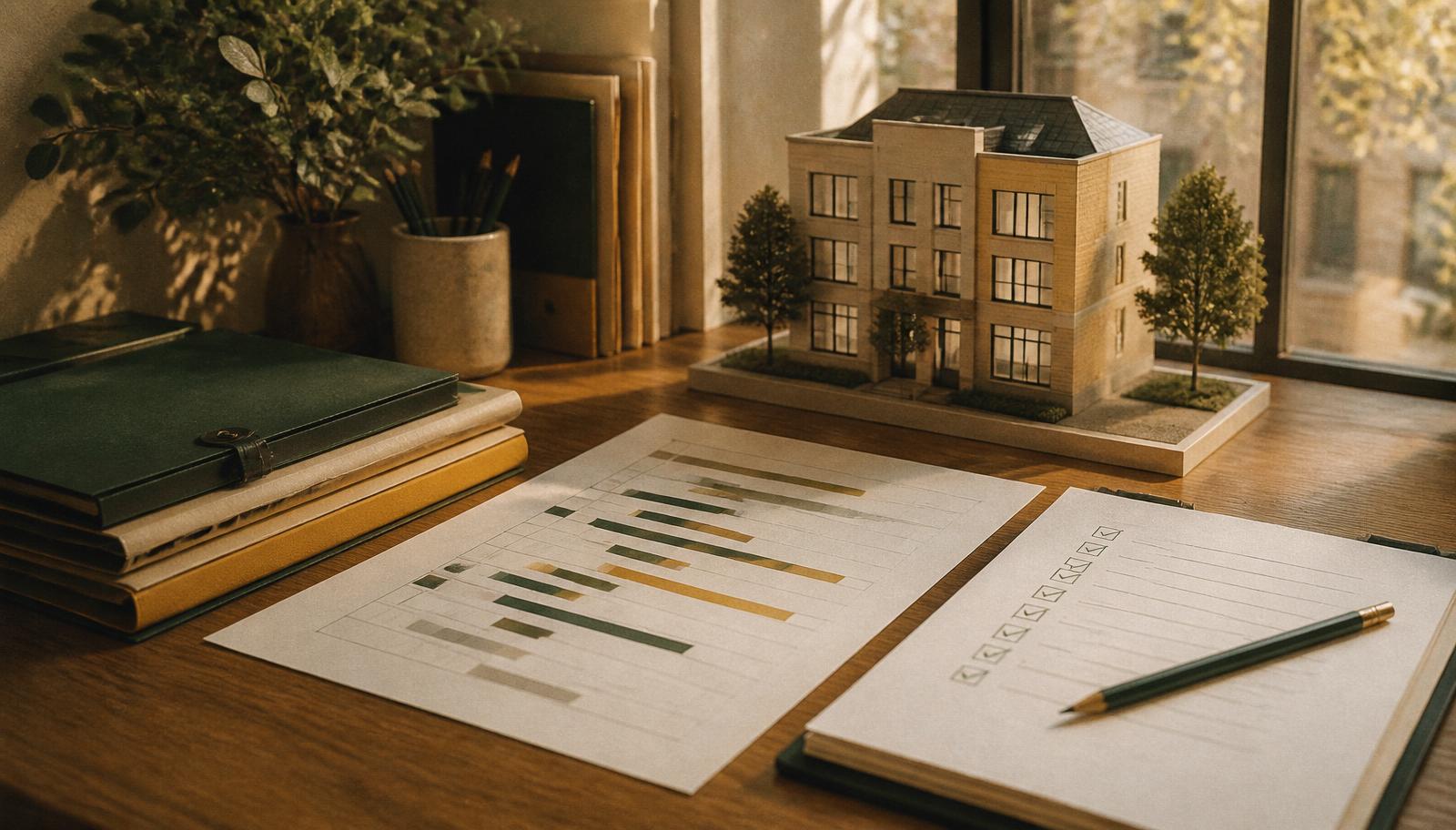
Before construction begins, these are the systems worth having in place:
- A fixed-price building contract, signed before any work starts
- Confirmed builder warranty insurance
- An agreed progress payment schedule — never paying ahead of completed work
- Regular site meetings locked in from the outset, not arranged reactively
- A 15% contingency reserve, set aside and genuinely untouched unless truly needed
- A documented exit strategy: sell, rent, or refinance on completion
- A written Plan B: what happens if the market softens, or the builder is delayed
- A solicitor engaged and available for any contract issues that arise
Control, in this context, doesn't mean doing everything yourself. It means always knowing what's happening, who's responsible for what, and what your actual options are the moment something doesn't go to plan.
A story worth knowing
One developer was halfway through her first duplex build when her builder went into liquidation — about as close to a worst-case scenario as this industry has to offer. But she'd done two things right from the very start of the project: she had a fixed-price contract with a proper progress payment schedule, so she hadn't overpaid for work that hadn't actually been completed. And she had builder warranty insurance in place, which covered the cost of bringing in a new builder to finish the job.
She lost time. She did not lose the project. The lesson isn't that bad things don't happen in property development — clearly they can, even to careful people. It's that the right preparation, set up before you need it, is what stops a bad thing from becoming a catastrophic one.
What losing control actually looks like — and how it's avoided
In every case I've seen where a developer genuinely lost control of a project, the pattern was the same: no fixed-price contract, so costs crept upward without limit. No contingency, so a manageable setback became a financial emergency. No regular check-ins, so problems compounded silently before anyone noticed. No documented Plan B, so decisions were made in a panic rather than according to a plan made calmly in advance.
Every one of those is preventable, and every one of them is set up before the project starts, not during a crisis.
The reframe that matters
You don't need to anticipate every possible thing that could go wrong on your project — nobody can, and trying to is its own kind of trap. What you need is a small number of structural protections in place from day one, so that when something inevitably does go differently than planned, you have a process to fall back on instead of a scramble.
Control isn't the absence of problems. It's having a plan for them before they arrive.
Where to start
If this fear of losing control resonates, the free Property Prequel Quiz gives you an honest, personalised starting point in about three minutes. And the free 5 Fears ebook walks through the exact systems experienced developers put in place to stay in the driver's seat, alongside the four other fears that tend to show up alongside this one.
Take the quiz: propertyprequelquiz.com
---