
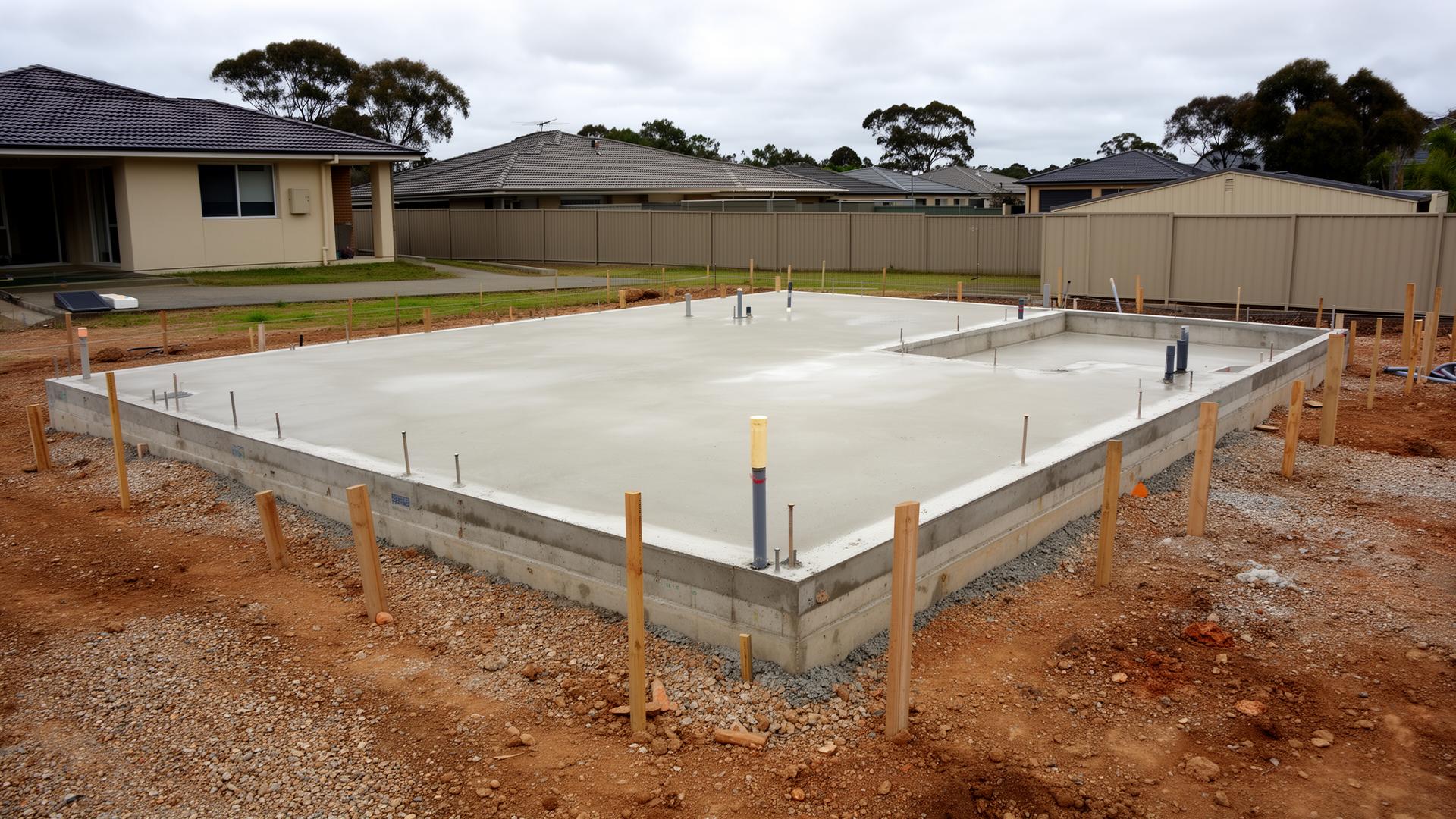
Property development in Australia is not a passive investment and it is not a get-rich-quick scheme. It is a business activity that requires capital at risk, active involvement, and the willingness to keep going when a council, a builder, or the market moves against you. The financial conversation has to start there - not with a margin spreadsheet, but with an honest look at what you actually have, what you can absorb, and what would happen if a project ran six months long.
The capital range - honest numbers
A typical small residential development in Australia requires access to equity, savings, or borrowing capacity in the range of $150,000 to $500,000 or more, depending on the project type, the location, and the way the project is structured. That is a wide range because the projects are wide-ranging: a duplex on a flat block in a regional growth corridor sits at one end; a three-unit development on a sloping inner-suburban site sits at the other.
The range is not a reason to say no automatically. It is the reason to look at your actual numbers honestly before going further. The most common pattern at the decision stage is people who quietly assume they have more accessible capital than they do - and people who quietly assume they have less. Both are decisions worth making in daylight rather than in your head at 2am.
Where the money actually goes
The capital does not all go in at the start. It moves through the project in waves, and most beginners under-budget the parts they cannot see on a real estate listing:
- Land and acquisition costs - the headline price, plus stamp duty, legals, due diligence.
- Soft costs - design, planning, engineering, surveys, DA fees, contributions. These can run into tens of thousands before a sod is turned.
- Construction - the largest line, and the one that moves the most when materials or labour shift.
- Holding costs - interest, rates, insurance across an 18-month-to-3-year timeline.
- Contingency - the line beginners delete to make a feasibility look better, and the line experienced developers protect with their life.
Four common funding paths - and the trade-off of each
Most first-time Australian developers fund their project through one of four paths, or a combination of them. None is universally right. Each one carries a different kind of pressure.
Often the largest single source of capital available. The trade-off is that your family's financial security is now tied to the project. If it runs over, your home is the exposure.
Cleaner emotionally - the money was already earmarked for an investment. The trade-off is that few first-time developers have enough sitting in cash to fund a project alone, so this usually combines with one of the others.
Spreads the capital and often the risk. The trade-off is governance: who decides, who signs, what happens if one of you wants out, what happens if the project loses money.
Possible in specific circumstances but the highest-pressure path. With no equity buffer, a 5% cost overrun or a six-month delay can be the difference between a small profit and a real loss.
The buffer principle
The single most useful financial test at the decision stage is not can I afford to do this? It is can I absorb a meaningful financial loss without catastrophe?
A meaningful loss is not theoretical. Projects run over. Councils refuse applications and you go to appeal. Builders go broke mid-build. Markets shift between the day you commit and the day you settle. These are not rare; they are part of the working environment, including on real projects I have run.
A buffer is capital that is not in the project - not in the deposit, not in the contingency, not in the borrowing capacity. It is the financial room you keep outside the project so that if it does run sideways for a quarter, you can keep paying the mortgage, feeding the family, and making clear decisions instead of panicked ones. The size of the buffer that is right for you is a personal question, but the principle is not.
Three honest questions before you go further
- What is my actual accessible capital today - equity I could draw, savings I could deploy, borrowing capacity I have confirmed (not guessed)?
- What would a 15% cost overrun and a 6-month delay do to my household - not to the project's profit margin, to my household?
- If the answer to question 2 is "we would be in real trouble" - is the right move to wait, to scale down, to bring in a partner, or to walk away with that information intact?
None of these questions has a wrong answer. They have an honest answer. That is what the decision stage is for.
Where to go from here
Financial readiness is one of five dimensions that determine whether property development is the right vehicle for you. The fastest way to get a structured read across all five - financial, knowledge, risk tolerance, time and capacity, decision clarity - is the Readiness Score Tool. It takes about ten minutes and gives you a personalised breakdown showing where your specific gaps are, not just whether you are "ready" in the abstract.
The Readiness Score Tool scores you across financial readiness, knowledge and confidence, risk tolerance, time and capacity, and decision clarity. Free. About ten minutes.